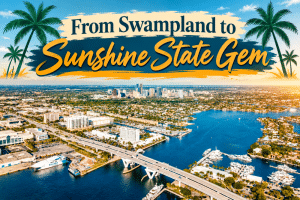
 Broward County has a fascinating history shaped by the Everglades, early pioneers, railroads, real estate booms, hurricanes, military activity, tourism, and decades of rapid growth. What was once a largely undeveloped landscape of wetlands, waterways, pine forests, and small settlements has become one of Florida’s largest and most diverse population centers. From the early communities along the New River to the growth of Fort Lauderdale and the expansion of cities west toward the Everglades, Broward County’s story reflects the larger transformation of South Florida. Understanding that history offers a new perspective on the cities, neighborhoods, waterways, landmarks, and attractions we know today.
Broward County Before Modern Development
Long before Broward County became one of Florida’s most populated urban areas, the region was dominated by wetlands, pine forests, coastal hammocks, mangroves, and waterways connected to the Everglades. Indigenous peoples lived throughout South Florida for thousands of years, including the Tequesta, who occupied areas along the southeastern Florida coast. Later, Seminole and Miccosukee people established communities in and around the Everglades, maintaining a lasting cultural connection to the region.
Early Settlement in the Broward County Area
European and American settlement in what is now Broward County remained relatively limited for much of the 1800s. South Florida’s wetlands, mosquitoes, heat, and lack of reliable transportation made large-scale settlement difficult. Small communities gradually appeared along the Atlantic coast and waterways, while inland areas remained largely undeveloped. The New River, which runs through present-day Fort Lauderdale, became particularly important for transportation and early settlement.
Frank Stranahan and the Growth of Fort Lauderdale
One of the best-known figures in Broward County’s early development was Frank Stranahan. He arrived in the Fort Lauderdale area in the 1890s and established a trading post along the New River. Stranahan traded with Seminole people and served the small but growing local population. He and his wife, Ivy, became prominent members of the community, and their preserved home, the Stranahan House, remains one of Fort Lauderdale’s most recognizable historic landmarks.
The Railroad Changes South Florida
A major turning point came when Henry Flagler extended the Florida East Coast Railway into South Florida during the 1890s. The railroad made it significantly easier for people, supplies, agricultural products, and tourists to travel between South Florida and communities farther north. Fort Lauderdale developed around the railroad, while other settlements began growing throughout the region. Improved transportation helped transform southeastern Florida from a relatively isolated frontier into an increasingly accessible destination.
Broward County Is Established in 1915
Broward County was officially created in 1915 from portions of Palm Beach and Dade counties. It was named after Napoleon Bonaparte Broward, who served as governor of Florida from 1905 to 1909. During his political career, Broward strongly supported efforts to drain portions of the Everglades for agriculture and development. Fort Lauderdale became the county seat and would eventually grow into Broward County’s largest city and economic center.
Draining the Everglades and Opening Land for Development
Drainage projects dramatically influenced Broward County’s growth during the early 20th century. Canals were constructed to move water and make previously wet land more suitable for farming and development. These projects opened large areas of eastern and central Broward County to agriculture and settlement. Over time, however, the environmental consequences of altering South Florida’s natural water system became increasingly apparent, contributing to later efforts to protect and restore portions of the Everglades.
The Florida Land Boom of the 1920s
Broward County experienced tremendous real estate speculation during Florida’s famous land boom of the 1920s. Developers promoted South Florida across the United States as a tropical paradise where people could enjoy warm winters, beaches, boating, and new communities. Fort Lauderdale expanded rapidly, and new subdivisions appeared throughout the area. The boom eventually collapsed, and the devastating 1926 Miami hurricane further damaged communities and contributed to the region’s economic difficulties before the Great Depression.
World War II Brings New Growth
World War II became another important turning point for Broward County. The military established facilities in the Fort Lauderdale area, bringing thousands of servicemen and workers to South Florida. Naval Air Station Fort Lauderdale trained military aviators, including pilots associated with the famous Flight 19 disappearance in 1945. Many servicemen who experienced South Florida during the war returned afterward with their families, helping fuel the county’s enormous postwar population growth.
Suburbs, Highways and a Population Explosion
Beginning in the 1950s, Broward County underwent one of the most dramatic transformations in its history. New roads, highways, homes, shopping centers, schools, and businesses spread westward from older coastal communities. Cities such as Hollywood, Pompano Beach, Plantation, Sunrise, Davie, Coral Springs, Pembroke Pines, and Miramar grew substantially. Air conditioning, widespread automobile ownership, interstate highways, and Florida’s growing popularity among retirees and families helped turn Broward into a major metropolitan county.
Broward County Today
Today, Broward County is home to nearly two million residents and includes 31 municipalities stretching from Atlantic Ocean communities to the edge of the Everglades. Fort Lauderdale remains the county seat and is internationally known for boating, tourism, beaches, and its extensive canal system. Port Everglades has developed into an important cruise and cargo port, while Fort Lauderdale-Hollywood International Airport connects the region with destinations around the world. Broward County’s modern identity reflects its unusual transformation from wetlands and scattered settlements into a diverse urban community at the heart of South Florida.
In just over a century, Broward County has experienced an extraordinary transformation. Railroads opened the region to new residents, canals reshaped the landscape, the Florida land boom brought development, World War II accelerated population growth, and postwar expansion created many of the communities that define Broward today. Yet reminders of the county’s past can still be found throughout the area—from the New River and historic Fort Lauderdale to preserved landmarks, longtime neighborhoods, and the Everglades along the county’s western edge. Broward County continues to evolve, but its history remains an important part of what makes this corner of South Florida such a distinctive place to live, work, visit, and explore.
Frequently Asked Questions About Broward County History
1. When was Broward County founded?
Broward County was officially created in 1915 from portions of Palm Beach County and Dade County, which is now known as Miami-Dade County.
2. Who was Broward County named after?
The county was named after Napoleon Bonaparte Broward, Florida’s governor from 1905 to 1909. Broward was a prominent supporter of efforts to drain portions of the Everglades and make additional South Florida land available for agriculture and development.
3. What is the oldest community in Broward County?
Several areas have deep histories, but the Fort Lauderdale/New River area was one of the county’s most important early centers of settlement and commerce. The arrival of the railroad in the 1890s helped accelerate Fort Lauderdale’s development.
4. Why did Broward County grow so quickly?
Broward County’s growth resulted from several factors, including the railroad, drainage and land development, Florida’s 1920s land boom, World War II military activity, air conditioning, improved highways, tourism, and the massive migration of new residents to South Florida after World War II.
5. How did the Everglades influence Broward County’s history?
The Everglades shaped nearly every stage of Broward County’s development. Wetlands originally covered much of the area and limited westward expansion. Early drainage and canal projects opened land for farming and development but also altered the natural ecosystem. Today, the western edge of Broward County borders protected Everglades lands, making conservation and water management important parts of the county’s continuing story.
—
Boiler Plate Coming!